
Foundation Investor Data Room
Enter your email to access the investor deck and supporting materials
Enter your email to access the investor deck and supporting materials
FOUNDATION
Making institutional RWAs liquid, composable, and permissionless
What's On-Chain Today
Institutional-grade assets are arriving on-chain. Treasuries, credit, real estate, CLOs
What's Coming
Chains need TVL. Funds need distribution. Infrastructure is missing.
The bottleneck isn't tokenization. It's distribution.
Fund Managers
Can't reach DeFi users
Assets are tokenized, but there's no permissionless channel to tap DeFi demand.
Chains & Ecosystems
RWA TVL arrives dead
Tokenized funds land on-chain but remain non-composable, illiquid, and entirely siloed.
DeFi Users
Locked out entirely
Blocked from using institutional yield by high minimums, KYC, and lockups.
Everyone wants the same thing — institutional assets that work in DeFi. The missing piece is the distribution and enablement layer.
Foundation makes tokenized RWAs liquid, composable, and permissionless, so fund managers can distribute, chains can attract TVL, and users can use institutional assets in DeFi.
For Fund Managers
Permissionless distribution
Reach DeFi users without building distribution infrastructure. Foundation handles compliance, liquidity, and protocol integrations. Plug in and go.
For Chains & Ecosystems
RWA TVL that actually works
Plug-and-play RWA infrastructure. Institutional TVL that's composable — usable as collateral, lendable, tradeable natively. Not just parked on your chain.
For DeFi Users
Institutional yield, DeFi utility
On-demand liquidity, full composability, no KYC. Borrow against positions, loop for amplified yield, exit anytime. Institutional-grade assets that behave like DeFi primitives.
One layer. Three stakeholders. All aligned.
THE DISTRIBUTION FLOW
Fund Managers Bring Assets
Apollo, Hamilton Lane, Fasanara, and more. Foundation wraps tokenized RWAs for DeFi utility.
Foundation Adds the Enablement Layer
On-demand liquidity via liquid buffer, permissionless lending integration, and compliance handled upstream.
Assets Become Usable
Composable collateral on Solana. Borrow, loop, trade. Chains get real RWA TVL. Users get institutional yield with DeFi utility.
| Foundation | Issuers (Securitize, Ondo) | Looping Desks | Distributors (Nest) | |
|---|---|---|---|---|
| Multi-asset RWA support | ✓ | ✓ | Single-asset | ✓ |
| DeFi composability | ✓ | ✗ (siloed) | Partial | ✗ |
| On-demand liquidity | ✓ | ✗ (quarterly) | Via fee | ✗ |
| Permissionless access | ✓ | ✗ (KYC each user) | ✗ | ✗ |
| Chain-native integration | ✓ (Solana-first) | EVM only | Protocol-specific | Custodial |
Issuers tokenize. Looping desks add leverage. Distributors pass through yield. Foundation is the only protocol that makes the assets actually usable.
Not just another wrapper. A full enablement stack for tokenized RWAs.
The Approach
Distribution, not wrapping
We don't just wrap tokens. We build the full enablement stack: liquidity buffers, lending integration, compliance abstraction. Fund managers plug in, DeFi users plug in.
Liquidity Architecture
On-demand exit, zero lockups
Institutional funds typically require quarterly redemptions. Our dual-channel architecture and native liquidity buffers provide instant, secondary-market exits for users.
Architecture
Asset-agnostic by design
The same distribution layer works for treasuries, real estate funds, CLOs, structured products — any tokenized fund that needs DeFi utility.
We take a 10% cut of yield on all assets under management, plus 0.3% on secondary market transactions.
10%
Management Fee
of yield generated
0.3%
Secondary Market Fee
on mint/redeem
50%+
Gross Margin
at scale
YEAR 1 TARGET
$300M TVL
Revenue
$6M
Pre-launch with key infrastructure and partnerships locked.
DONE
Protocol Built
DONE
Solana-Native Partners
IN PROGRESS
Community & Visibility
Pipeline (post-legal setup): Securitize, Fasanara, Centrifuge and additional issuers ready to onboard once SPV and compliance framework is in place.
Partners & Integrations
On-Chain Yield




Ecosystem



Pipeline Issuers



STEP 01
Native Yield Aggregation
THE HOOK
STEP 02
Embedded Distribution
B2B2C SCALING
STEP 03
Institutional Sales
STICKY TVL
Scale & Institutionalize: Once the flywheel is spinning and SPV legals are complete, we plug in Securitize, Fasanara, and Centrifuge for multi-asset institutional scale.

3x founder. 12 years in product. Built fintech at Spenmo (YC S20), structured finance at KPMG. Now building RWA distribution infrastructure on Solana.
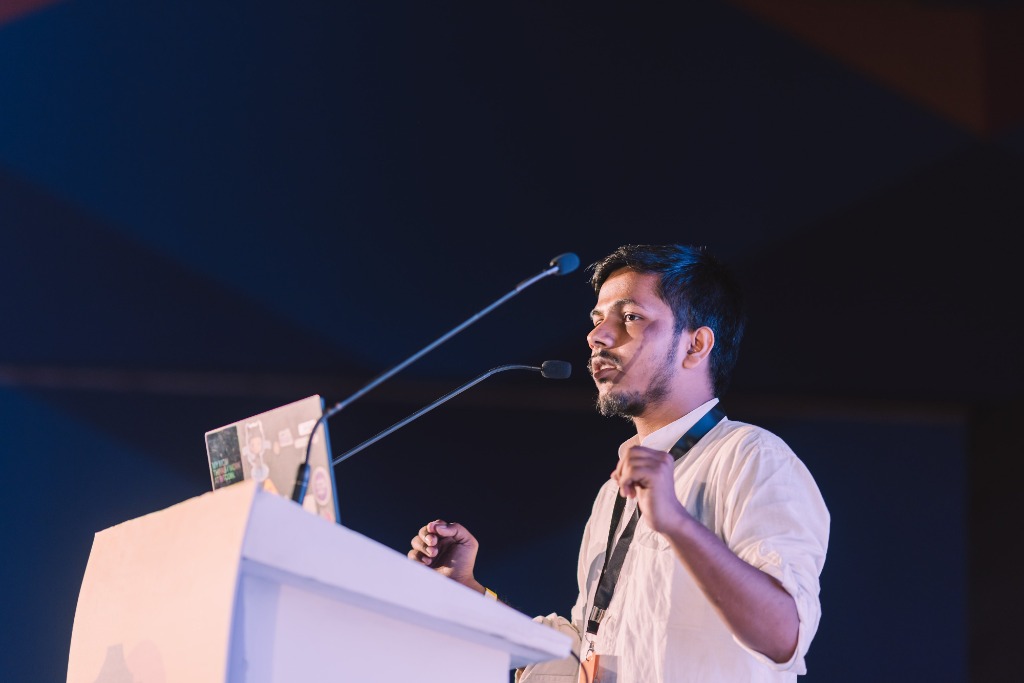
Systems Engineer with 6+ years building production infrastructure for distributed systems, privacy protocols, and DeFi primitives across Solana, Filecoin, and Ethereum.
Build the legal and technical foundation for distribution and future origination.
Legal & Structure
SPV setup, legals, tax & compliance.
Development & Audits
Core protocol dev, smart contracts & security audits.
Operations & GTM
Team expansion, partner integrations & initial GTM.
MILESTONES
Q2 2026
Vaults live, initial users, legals complete
Q3 2026
$50M+ TVL, multi-fund expansion, seed round
2027
Own SPV, origination pilot, compute financing
STRATEGIC DELIVERABLES
Legal: SPV structure + tax opinions
Tech: Audited vaults + tokenization stack
Live: First fund integration live, users onboarded
YEAR 1
$300M TVL
RWA funds on Solana. Prove the distribution model works.
YEAR 2
$1B TVL
Multi-asset. Multi-chain. 10x supply of usable RWAs.
YEAR 3
$10B TVL
Originate and distribute. Full-stack RWA infrastructure.
Tokenization alone isn’t enough. The next phase of the market will be defined by who makes these assets usable. That’s what we’re building.
CEO & CO-FOUNDER
Foundation is bridging institutional RWAs to the on-chain economy.
End of Deck
Supplementary materials for due diligence.
Technical details, unit economics, and growth models.
Starting with proven, tokenized loans before building our own origination stack.
FASANARA
mF-ONE
12.3%
29.3%
BASE / LOOPED
Multi-strategy credit fund. Consumer & SMB lending, trade finance, yield optimization.
TVL
$135M
Instant Liq.
$8M
Redemption
35 days
Transferable
Yes
PRIMARY LAUNCH PARTNER
APOLLO
ACRED
9.4%
19.7%
BASE / LOOPED
Multi-asset private & public credit. Corporate lending, asset-backed, structured credit.
TVL
$130M
Underlying
$1.3B
Redemption
Quarterly
Senior Secured
96%
PRIMARY LAUNCH PARTNER
HAMILTON LANE
SCOPE
6.2%
9.0%
BASE / LOOPED
Senior secured loans to top-tier borrowers. First-lien protection, stable returns.
TVL
$7M
Track Record
31+ years
Redemption
Monthly
Inception
+22%
EXPANSION TARGET
Phase 1: KYC'd LP Flow
LP deposits RWA (e.g. ACRED)
Already KYC'd via Securitize
Vault loops RWA on Morpho
3.33x leverage at 70% LTV
LP receives ApolloUSD
Earning ~18% APY (leveraged)
LP stakes to enable distribution
Extra incentive for staking
Phase 2: Retail Access (No KYC)
CHANNEL 1: PROTOCOL MINT/REDEEM
Mint: Pay NAV in USDC → get ApolloUSD from staked pool
10% USDC → redemption buffer / 90% → curator vault
Redeem: Return ApolloUSD → get NAV from USDC buffer
Position-tracked — only your minted amount is redeemable
NAV in, NAV out. ~16.6% APY.
CHANNEL 2: DEX (INDEPENDENT MARKET)
Buy/sell ApolloUSD on Curve at market price
Trades at NAV - discount (reflects time to unlock)
No buffer redemption rights. Exit via DEX or Fission.
Market price in, market price out. ~18% APY.
Key: Position tracking prevents cross-channel arbitrage. Buffer serves protocol users only — DEX tokens cannot redeem from buffer.
Two Separate Products
Protocol Mint/Redeem
NAV GUARANTEEDMint at NAV from staked pool. Redeem at NAV from USDC buffer. Position-tracked — only minted amount redeemable.
PRICE
NAV in / NAV out
APY
~16.6%
EXIT
Instant (buffer)
DEX (Curve)
MARKET PRICEBuy/sell on Curve at market price. Independent liquidity pool. No buffer redemption rights.
PRICE
NAV - discount
APY
~18%
EXIT
DEX / Fission
Fallback Options
ALL USERSFission (instant, market-driven fee, limited capacity) or wait for quarterly ACRED unlock (zero fee, 14+ days).
Why This Works
ZERO CROSS-CHANNEL ARBITRAGE
Position tracking separates redemption rights from the token itself. Buying cheap on DEX does not grant NAV redemption. No arb between protocol and DEX.
Position Tracking
Protocol records each user's minted amount. Buffer redemption is limited to this tracked position. Transferring or selling ApolloUSD does not transfer the position — only the token moves.
USDC Redemption Buffer
10% of each retail mint goes to a USDC buffer. Enables instant NAV-out for protocol minters. Buffer replenished at quarterly unlock. Reduces yield slightly (~1.4%) as trade-off for guaranteed exit.
Capital Split
Redemption Buffer
10%
Curator Vault (looping)
90%
Year 1 Target: $300M institutional TVL (of which $100M LP staked) → $100M distribution capacity
How We Make Money
Management Fee
10% of yieldOn all vault TVL. At 18% RWA yield → 1.8% protocol revenue.
$300M × 18% × 10% = $5.4M/yr
Secondary Market Fee
0.3%Non-KYC'd users via LP program (14-day lock). Institutional: free.
$100M × 2x turnover × 0.3% = $600K/yr
DEX Trading Fee
0.04%Curve pool fee share on instant trades.
~$50K/yr
How We Spend Money
LP Incentives
Extra APYPaid to staked LPs enabling distribution. Enhanced yield on top of leveraged position. 10% USDC buffer handles instant redemptions—protocol pays $0 shortfall.
$100M LP × 5% = $5M/yr (in tokens)
Operations
$40K/moTeam, infrastructure, audits, legal.
$480K/yr (cash)
YEAR 1 SUMMARY
| Revenue | ~$6M |
| LP Incentives (tokens) | $5M |
| Operations (cash) | $0.5M |
| Net (cash basis) | ~$5.5M |
Quarterly Milestones
| Partner TVL | LP Staked | Distribution | Phase | |
|---|---|---|---|---|
| Q1 | $45M | $15M | $15M | Distribution |
| Q2 | $120M | $40M | $40M | Distribution |
| Q3 | $200M | $65M | $65M | + Tokenization prep |
| Q4 | $300M | $100M | $100M | Tokenization pilot |
Year 1 Focus
Phase 1: Distribution
(Fasanara, Apollo). Build infrastructure.
Phase 2 Prep: SPV
setup, tokenization stack. Launch pilot in Q4.
Year 1 Economics
Distribution Revenue
$6M
LP Incentives
$5M (tokens)
Revenue Breakdown
Management Fee
10%
of 18% yield on $300M TVL
→ $5.4M/yr
Secondary Fees
0.3%
on retail mint/redeem
→ $600K/yr
LP Incentives (Cost)
5%
APY on $100M LP capital
→ $5M/yr (tokens)
YEAR 1 NET
Cash: ~$5.5M
After token incentives: ~$0.5M net margin
LP Capital to Enable Distribution
| Distribution | LP Capital | DEX Buffer | Incentives |
|---|---|---|---|
| $25M | $25M | $3M | $1.3M/yr |
| $50M | $50M | $5M | $2.5M/yr |
| $100M | $100M | $10M | $5M/yr |
| $250M | $250M | $25M | $10M/yr |
LP ROLE
1. Stake to Enable Retail: LPs stake ApolloUSD,
retail mints against staked pool.
2. DEX Buffer: ~10% in Curve for instant trades.
3. No Shortfall Risk: 10% USDC buffer handles instant
protocol redemptions. LPs never subsidize.
Total LP Yield: 23% APY (18% leveraged + 5% incentive
in tokens).
Fundraise Roadmap
Pre-Seed (Current)
OPENAudits, legal, initial LP incentives, bootstrap to $25M TVL
Seed (H2 2026)
ScalingScale LP incentives, multi-chain expansion, reach $100M TVL
Series A (2027)
ExpansionInstitutional partnerships, protocol-owned liquidity, $500M+ TVL
Path to self-sustaining: At $250M+ TVL, protocol revenue (~$4M/yr) covers LP incentives + ops without dilution.
DEX is an independent secondary market for apolloUSD. Sourced from LP opt-in, POL, and market makers — separate from the protocol's USDC redemption buffer.
DEX: Independent Market Channel
Market Pricing
InstantTrades at market price (NAV - discount reflecting time-to-unlock). Buy/sell permissionlessly on Curve or Uniswap.
Liquidity Sources
LP opt-in allocations, protocol-owned liquidity (POL), and external market makers. Not sourced from the staked pool or USDC buffer.
No Buffer Rights
Position-TrackedDEX-purchased tokens cannot redeem from USDC buffer. Exit via DEX sell, Fission, or ACRED unlock.
Pool Depth Targets (1.5-2% of TVL)
| Stage | TVL | Pool Depth | Trade Coverage |
|---|---|---|---|
| Launch | $25M | $500-750K | Up to $20K |
| Year 1 | $100M | $1.5-2M | Up to $50K |
| Scale | $250M | $3-4M | Up to $100K |
FUNDING SOURCES
Launch: $100K fundraise + LP
matching + ecosystem grants
Ongoing: 20-25% of protocol
fees reinvested into POL
AI infrastructure needs capital. GPUs are attractive collateral. We originate, tokenize, and distribute.
Market Opportunity
$100B+
GPU financing demand by 2027
AI labs, inference providers, cloud platforms
Capital Gap
Banks don't understand GPU collateral. Equipment finance too slow. Crypto capital available but no infrastructure.
Attractive Collateral
H100s: $25-40K each, liquid secondary market, easy to verify and repo. Better than most equipment.
Foundation Advantage
Same Infrastructure
Phase 1-2 infrastructure becomes Phase 3 origination rails. Distribution + tokenization already built.
Lower Cost of Capital
DeFi distribution = global capital access. Better rates for borrowers, better yields for LPs than traditional equipment finance.
TARGET ECONOMICS
Loan Rate
15-20%
LP Yield
12-15%
Term
12-18mo
LTV
60-70%
Distribution → Tokenization → Origination. Progressive value capture.
Three Phases
Phase 1: Distribution
NOWWrap existing tokenized RWAs (Fasanara, Apollo). Build distribution infrastructure. Prove PMF.
Value: Distribution fees only
Phase 2: Tokenization
H2 2026Build own SPV structure. Tokenize non-tokenized loans as debt (Midas model). Structure funds ourselves.
Value: + Tokenization/structuring fees
Phase 3: Origination
2027+Originate loans ourselves (compute, equipment). Full stack: originate + tokenize + distribute.
Value: + Origination spread (3-5%)
What We Build Each Phase
Phase 1: Distribution Stack
Vaults, leverage integrations (Morpho, Zharta), staking, secondary market, redemption infrastructure.
Phase 2: Tokenization Stack
BVI SPV for debt issuance. Legal structure to tokenize traditional loans. NAV oracles, compliance layer.
Phase 3: Origination Stack
Delaware LLC for lending. Underwriting, collateral verification, loan servicing. Equipment valuator partnerships.
Full Stack = Moat
Each phase builds on the last. Distribution infrastructure becomes moat for tokenization → origination.